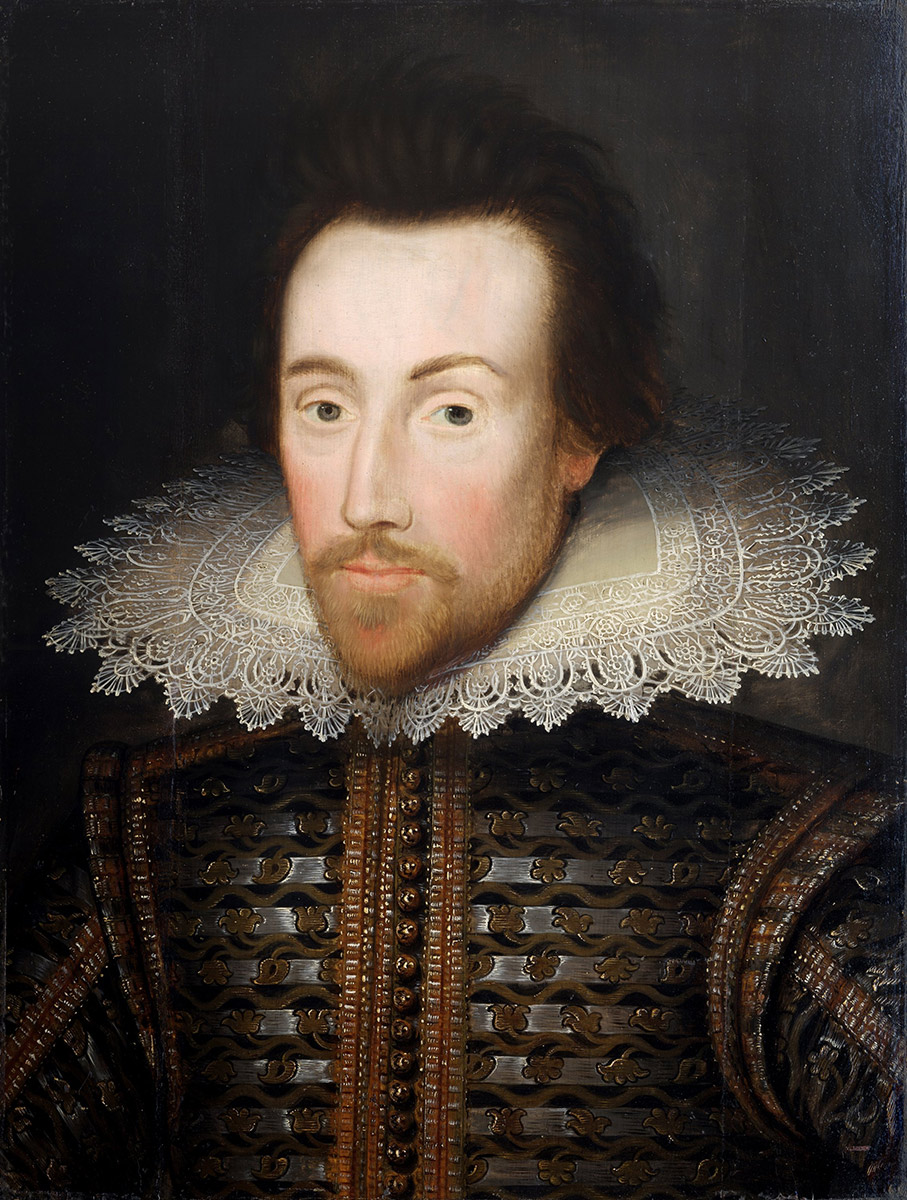
“From fairest creatures we desire increase, That thereby beauty’s rose might never die,
But as the riper should by time decease, His tender heir might bear his memory:
But thou contracted to thine own bright eyes, Feed’st thy light’s flame with self-substantial fuel,
Making a famine where abundance lies, Thyself thy foe, to thy sweet self too cruel:
Within thine own bud buriest thy content, And, tender churl, mak’st waste in niggarding:
Pity the world, or else this glutton be, To eat the world’s due, by the grave and thee.”
— Sonnet I, William Shakespeare
William Shakespeare’s Sonnet 1 is the opening poem of his famous sequence of 154 sonnets and introduces the key themes that will recur throughout this collection.
Structure and form:
Type: A 14-line poem with a specific rhyme scheme (ABABCDCDEFEFGG) and written in iambic pentameter.
Meter: Written in iambic pentameter, a rhythm that mimics the natural flow of speech.
Analysis by quatrain and couplet:
First Quatrain:
Lines 1-4: The poem begins with a general statement about procreation. Shakespeare suggests that beautiful creatures are desired so they can reproduce and prevent their beauty from dying out. The idea of a “tender heir” continues the theme of lineage and memory.
Second Quatrain:
Lines 5-8: The focus shifts to a specific individual, presumably a young man, who is accused of being self-absorbed. His self-absorption is metaphorically described as feeding his own light with his essence, creating a famine of his beauty in the world.
Third Quatrain:
Lines 9-12: The speaker continues to address the young man, calling him the “world’s fresh ornament” and a harbinger of spring. However, by keeping to himself and not procreating, he is accused of being wasteful and miserly (“niggarding”).
Final Couplet:
Lines 13-14: The speaker concludes with a direct appeal to the young man, urging him to have children. Otherwise, he will be seen as a glutton who consumes what is owed to the world.
Themes and Interpretation:
Procreation and legacy: The central theme is the importance of procreation as a means of preserving beauty and legacy. This theme is common in Shakespeare’s sonnets.
Beauty and selfishness: The sonnet contrasts the idea of external beauty with internal selfishness, suggesting that the failure to procreate is a form of self-love that harms the natural order.
Time and mortality: Like many of Shakespeare’s sonnets, this one grapples with the themes of time and mortality, emphasizing the urgency of continuing one’s lineage before death.
Youth and aging: There’s a contrast between youth and aging, with the suggestion that the natural progression of life should lead to procreation.
Artistic expression: This sonnet ultimately showcases Shakespeare’s ability to weave complex themes into a tightly structured poetic form, using rich imagery and metaphor.
Overall, Sonnet 1 functions as the intro to his whole Sonnet Sequence —It sets the stage for all the themes and moral concerns that will be explored in the subsequent sonnets.
Read more about The Sonnets in my book: The Last Poet
In The Spirit of Discovery,
The Alchemist