“If I were now to rewrite the book, I would offer the savage a third alternative. Between the utopian and the primitive horns of his dilemma would lie the possibility of sanity – a possibility already actualized to some extent in a community of exiles and refugees from the Brave New World, living within the borders of the reservation.
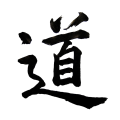
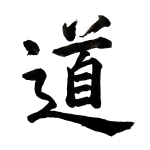
Religion would be the conscious and intelligent pursuit of man’s Final end, the unitive knowledge of the imminent Tao or Logos, the transcendent Godhead of Brahman. And the prevailing philosophy of life would be a kind of higher utilitarianism. In which the greatest happiness principle would be secondary to the Final end principle.”
– Aldous Huxley,
(Forward to the Penguin Modern Classics edition of Brave New World, reprinted in 1975, bought in a used bookstore in Observatory, Cape Town, South Africa 2019.)
“Why is freedom of speech important?” I once asked myself. The first thought that popped into my head was an image of myself at 13, reading the book “Brave New World” (from 1932 by Aldous Huxley) at a sort of ‘Mormon colonization’ camp in Gothenburg, Sweden in the early nineties. The book paints a picture of an extremely overprotective and therefore extremely controlling future society where humanity, with the advance of technology and drugs, hoped to construct a “perfect” world where everyone was happy. However, in the process of enabling this utopia, the state gradually stripped away all individual freedoms over time.
Institutions and schools trained infants from a young age through language control and punishments to hate books and view individual thinking as threatening and anti-state. Since the sex drive was interpreted as the root of aggression, the state ultimately castrated people to take full control over society’s sexual reproduction—it was illegal to conceive children independently. Everything was managed by the state.
Here, “Family” had become a derogatory term, and being a father or a patriarch had become the most shameful role one could assume. The beautiful world that psychology and technology made possible had, in reality, become a prison for the mind, which was denied its free interpretations and associations.
The hero of the book, living amidst this societal colonization, did not feel like a whole person and refused to partake in the mandatory “pain-relieving” drugs distributed to the populace. Instead, he decided to defy the societal order, confront individual suffering and the accompanying fear of the unknown; venture into pain and unaltered nature to reunite with his fundamental essence and the original conditions of reality.
This book made a significant impression on me, and I found it astonishing that it was even possible to write texts in this spirit—I remember being completely flabbergasted that individuals were even allowed to write such books. It was so accurate, so out there, so funny, and so critical of contemporary society—and the inherent stupidity of the human race. I was at a loss for words. It overwhelmed me. It was a brutal caricature from a higher perspective of the tendencies in the society around me that were so constantly present.
After finishing “Brave New World,” I continued in the same vein and read “Kallocain” from 1940 by Karin Boye. The same theme appeared here, inspired by the societal developments in both Germany and the Soviet Union before World War II—but with a greater focus on the enslavement of people under the banners of “protection from evil” and “promises of security.”
Due to all the surveillance, societal control, propaganda, and implicit demands for conformity, people stopped trusting each other, their families, even their closest friends. Everyone was terrified of being reported and brought to justice if it was discovered they had politically incorrect thoughts or behaviors.
A scientist (Leo Kall) invents a truth serum (Kallocain) that makes people reveal their personal thoughts and innermost dreams (not programmed by the state’s ideals). The government starts using this tool in its investigations of potentially anti-state individuals.
When I read the book, it became evident how the author wanted to convey that individual, artistic self-expression (freedom of speech) was the seed of human freedom (as opposed to protection and control from above) while also being the strongest force for an individual to influence the direction of society.
After “Kallocain,” I read “1984.” The same theme emerged again, but here the focus was more deeply on the government’s control of language. “Newspeak” was the only legal, politically correct set of words one could use—to prevent criticism of the party’s ideas and limit people’s thinking habits to be solely “socially useful.”
I thought this book most clearly highlighted the manipulation that can occur when a ruling power starts legislating what an individual can and cannot say.
In 2018, I read a book called “The Gulag Archipelago” by Aleksandr Solzhenitsyn. A Russian author, historian, and former Soviet dissident. It was a book I had long had on my shelf but had been “worried” about diving into. Here, truth surpasses fiction. The aforementioned “warning” visions of the future are small potatoes compared to the nightmare cavalcade of torture methods and mass murders that people truly subjected each other to in the Soviet Union, particularly during the 1940s and 1950s. All under the banners of “Protection from evil!” and “Promises of security!” Aleksandr received the Nobel Prize in Literature in 1970.
This is why freedom of speech is important. It actually creates the conditions for ‘individuals’ and society to ‘co-exist’. Collective-individualism. It’s clear that when a ruling power begins to infringe on people’s rights to speak and think, it soon leads to catastrophe, and society destroys itself in the worst possible way.
Perhaps subconsciously, I had hoped that the aforementioned books had influenced most people or that the circumstances behind the greatest disasters in world history would be made clear in our educational system. But that is not what I see.
I see many who cannot stop pointing fingers and scapegoating. I see many who turn “care” or faked “compassion” into a weapon and make enemies of everyone who does not agree with their viewpoint, creating an ‘us and them’ dynamic. I also see a state that is going too far and making several foolish, unconscious decisions right now.
But, I also see many creative individuals doing their best to mischievously find the balance between all these forces and sometimes stirring things up to inspire the world. A growing group of people who have taken on the hardest task of all, the responsibility for their own thoughts, feelings, actions and lives.
Comparing Orwell’s ‘1984’ to Huxley’s ‘Brave New World’.
In his commentary sequel from 1958, Huxley states:
“The real hopeless victims of mental illness are to be found among those who appear to be most normal.. Many of them are normal because they are so well adjusted to our mode of existence, because their human voice has been silenced so early in their lives, that they do not even struggle or suffer or develop symptoms as the neurotic does.. They are normal not in what may be called the absolute sense of the word; they are normal only in relation to a profoundly abnormal society. Their perfect adjustment to that abnormal society is a measure of their mental sickness. These millions of abnormally normal people, living without fuss in a society to which, if they were fully human beings, they ought not to be adjusted.”
― Aldous Huxley, Brave New World Revisited
“It is no measure of health to be well adjusted to a profoundly sick society.”
“The primary cause of disorder in ourselves is the seeking of reality promised by another.”
“You must look within yourself, explore and question everything, and find out what is true for yourself. The truth cannot be given to you by someone else.”
“Freedom and love go together. Love is not a reaction. If I love you because you love me, that is mere trade, a thing to be bought in the market; it is not love. To love is not to ask anything in return, not even to feel that you are giving something—and it is only such love that can know freedom.”
“The moment you follow someone you cease to follow Truth.”
— Jiddu Krishnamurti
Brought up the midst of Mormon Brainwashingon the one hand; castration, pedophelia, death threat, home made sleeping aids, restricting people what to say, think, feel and do. not allowing them to partake in the regular ceremonies of society, that normal people do.
On the other hand, Emerging feminism. With prominent Swedish politicians screaming ‘Death for the core-family’. Chemical castration, Psychiatry, making people useless. Sjukdomsvinst.
Even Though, I guess children need some time being protected from the harsh realities of the world, through the ‘necessary illusions’ of propaganda, as Noam Chomsky put it.
Now, 30 years later, reading Brave New World again, I find myself effectively self-exiled from the madness that I was brought up in and imposed on me (as Huxley suggested in the initial quote). As an expat in South Africa, I happily drink high-quality black coffee, smoke strong Cuban cigars, and enjoy Irish whiskey and liqueur, systematically breaking all the ‘brainwashed commandments’ I was taught as a child.
I am successfully pursuing my vocation as the author and artist I always wanted to be. Growing my garden, so to speak. Here, at least, people are honest about their scams and desperation, mostly valuing truth, true compassion, and individual expression more than the false threats of their fears.
Bee Brave, BraveDave
This analysis is an excerpt from my book, 10 Steps to Conquering the World, Chapter/Step/Experiment #10:
In the Spirit of Discovery,
The Alchemist